Activities and Adventures in Punta Mita
Published May 31, 2026 · updated July 26, 2026
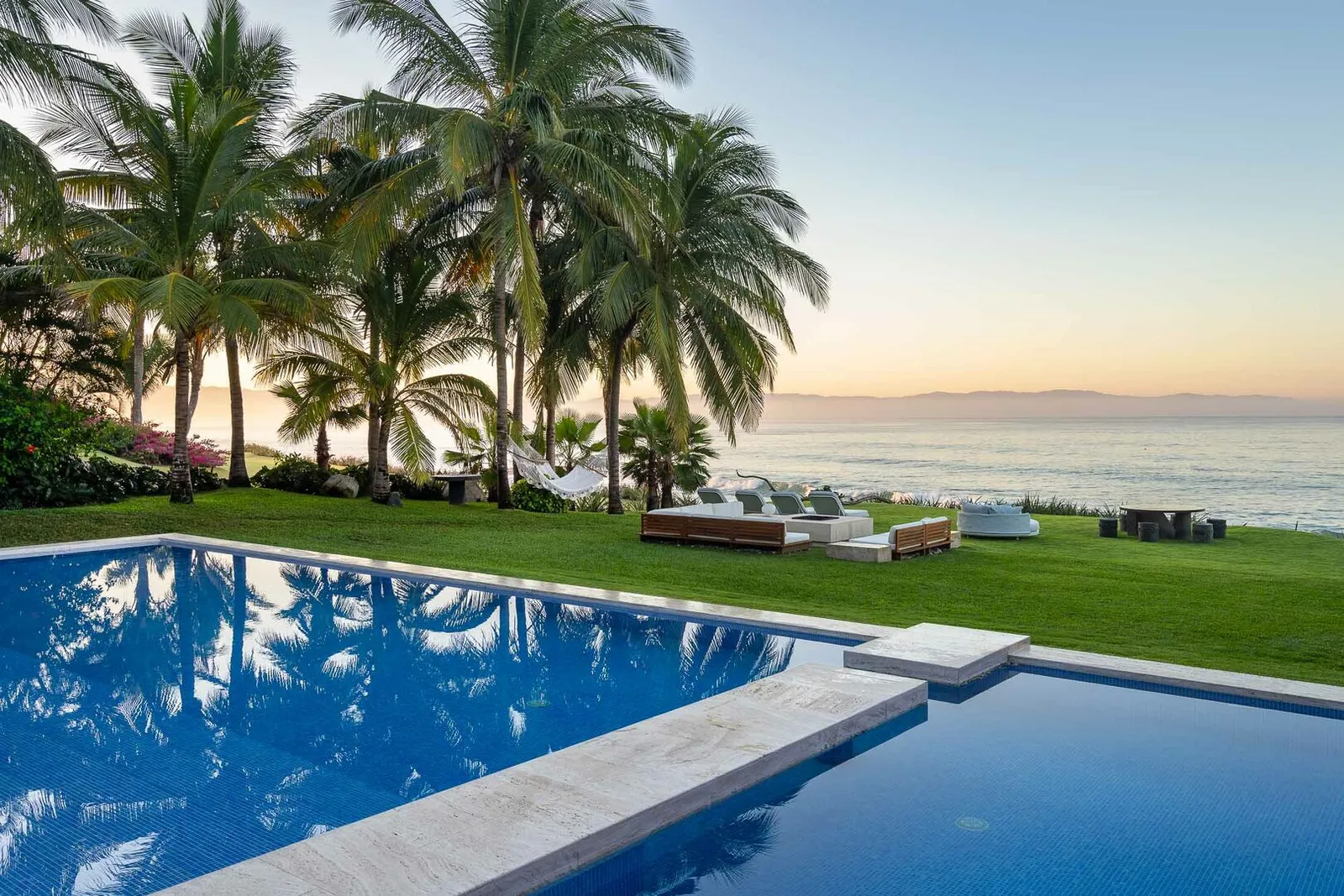
Punta Mita's activities organise themselves around three things: the two Jack Nicklaus Signature golf courses, the water on both sides of the peninsula, and the Islas Marietas sitting offshore. Golf, surfing, boat days to the Marietas, whale watching between November and March, fishing in Banderas Bay and unhurried wellness days at the villa are the core of what most guests actually do. Nearly all of it is booked through the villa or the club, which is why weeks here tend to arrange themselves rather than need planning.
What a week here actually looks like
Punta Mita is far more than a place to relax, it is a destination that rewards the curious and the adventurous with experiences that are simply unavailable anywhere else in Mexico.
In practice, most weeks settle into a shape. Mornings belong to the water and the golf course, because that is when the wind is down and the light is good. The middle of the day belongs to shade, lunch and the pool. Late afternoons belong to the beach, the village at El Anclote, or a boat coming back in. Nobody imposes this schedule. The peninsula simply works that way, and the sooner you stop fighting it the better the week goes.
The other structural fact worth knowing early is that almost everything here is arranged rather than booked in advance from home. Tee times, boats, instructors, guides and equipment run through the villa team and the club. That is why the standard advice for a first visit is to arrive with two or three things you genuinely want to do and leave the rest of the week open.
Golf on two Nicklaus courses
Golf is perhaps the defining activity of Punta Mita, with two world-class Jack Nicklaus Signature courses set against the backdrop of the Pacific Ocean and the Islas Marietas. The Pacifico Course is famous for its 3B hole, the only natural island green in the world, accessible by boat at low tide. Premier Golf membership, included with most MitaVillas properties, grants access to both courses along with practice facilities and the clubhouse.
The 3B is the hole everyone photographs, and it deserves the attention, but it is not the whole story of playing here. Both courses run out along the ocean, which means wind is a permanent factor and clubbing off the number rarely works. Play early if you want the calmest conditions. The second course covers different ground and different elevations, and most golfers who stay a full week end up playing both rather than repeating one.
Because the membership travels with the house rather than the guest, the villa you choose determines the golf you get. Villas in Pacifico Estates such as Pacifico 7 Norte, which has nine bedrooms and sleeps up to eighteen, carry Premier Golf, as do most of the houses in Kupuri Estates. A few properties carry Social or Premier Sport memberships instead, and a small number carry none, so confirm before you organise a golf trip around a specific address.
The Islas Marietas
The Islas Marietas are a UNESCO Biosphere Reserve and one of the natural wonders of the Pacific coast. Day trips by boat reveal extraordinary biodiversity, blue-footed boobies, manta rays, sea turtles, and the famous Playa del Amor (Hidden Beach), accessible only through a sea cave. Snorkeling and diving here are world-class.
What makes the Marietas unusual is that they are genuinely protected rather than nominally protected. Access to the most sensitive areas, including the Hidden Beach, is limited and controlled, and the number of people allowed in on a given day is capped. That is the reason the place still looks the way it does, and it is also the reason a Marietas day needs to be arranged in advance rather than decided over breakfast. Ask early in your stay, not the night before.
Even without setting foot on the Hidden Beach, the islands are worth the crossing. The bird colonies are visible from the water, the snorkeling around the rock walls is excellent, and the crossing itself, out past the tip of the peninsula, is where a lot of people see their first ray or turtle.
Whale season, November through March
Whale Watching is a seasonal highlight that draws visitors from around the world. Humpback whales migrate through the waters off Punta Mita from November through March, and boat tours from El Anclote offer extraordinary close encounters with these magnificent creatures. The sight of a breaching humpback against the backdrop of the Islas Marietas is one of the most memorable experiences in all of Mexico.
The humpbacks come to Banderas Bay to calve and to breed, which is why they linger rather than pass through, and why sightings during the season are so reliable. Mothers with new calves tend to stay in the calmer, shallower water, which puts them within reach of a short boat trip.
You do not always need a boat. From a terrace high enough to see the open water, spouts are visible on a clear morning, and guests staying somewhere like PH Vista Ballena in TAU find that the season becomes part of the daily view rather than a scheduled outing. Bring binoculars if you have them. They change the experience more than anything else you could pack.
Surfing, from the first lesson onward
Surfing is a way of life in Punta Mita, with breaks suitable for all levels from the gentle waves at El Anclote to the powerful swells at La Lancha and Burros. Several surf schools operate in the area, and experienced guides can take advanced surfers to remote breaks accessible only by boat.
The progression is well established. You start at El Anclote, where the inside wave is soft and the water is shallow and calm. Burros is the natural next step, a right hand point that runs long enough to actually practise turning. La Lancha, a powerful and consistent left, is where surfers who know what they are doing go, and it is reached on foot through the trees rather than by driving up to it. Veneros picks up swell along the same exposed stretch of coast.
Boards and instructors are straightforward to arrange, and lessons work well for children and for adults who have never stood up before. Mornings are almost always the better session, before the wind gets into the water. Guests who plan their week around waves gravitate toward Surf Residences and the ocean side of the peninsula.
On the water: fishing, sailing and diving
Banderas Bay is deep, and that depth comes close to shore, which is the reason the fishing here has the reputation it does. Sailfish, dorado and roosterfish are the names that come up most often, and the pangas that run day trips leave from El Anclote alongside the boats going out to the Marietas. Catch and release is standard for billfish. If you want to eat what you catch, say so at the start, and it can usually be arranged for you to bring it back.
Beyond fishing, the calm southern side of the peninsula is good ground for paddleboarding and kayaking, and the beach clubs keep equipment available through the day for members. Diving is done mostly around the Marietas and the rock structures nearby, and the visibility follows the seasons, generally clearer in the drier months.
Yoga, wellness and the slower days
Yoga and Wellness have become an integral part of the Punta Mita experience, with world-class instructors and retreat facilities available throughout the resort. Many villas can arrange private yoga sessions on the terrace, and the Four Seasons and St. Regis spas offer comprehensive wellness programs.
The private version is the one most guests end up preferring. A terrace facing the water at seven in the morning, an instructor who comes to the house, and nothing else on the schedule until lunch is a very different proposition from a class in a room. Massage and treatments can be brought to the villa in the same way.
This is also where the larger houses earn their keep. Multigenerational groups staying somewhere like Casa Familia in Kupuri Estates, which has eleven bedrooms and sleeps up to thirty, tend to split the day naturally: golf for some, a boat for others, the pool and a quiet terrace for everyone else, and one table at the end of it.
Off the peninsula
Sayulita, up the coast, is the standard excursion: a surf town with a beginner friendly wave, painted streets and market stalls, best taken as an afternoon and an evening. San Pancho is a little further on and considerably quieter. Both are an easy drive.
Inland, the Sierra Madre rises quickly behind the coast, and the villages in the foothills are a genuine change of temperature and pace. Puerto Vallarta, the gateway for almost every arrival, is worth a day on its own for the malecon and the old town, and the drive back out along the bay at sunset is one of the better parts of the trip.
Whatever you choose, the peninsula rewards restraint. Two or three real outings in a week, with the rest of the days left to arrange themselves around the water, is the version of Punta Mita that people come back for.
Common questions
- Do I need a membership to play golf in Punta Mita?
- Yes. Access to the two Jack Nicklaus Signature courses runs through the Premier Golf membership, which is attached to the villa rather than to the guest. Most MitaVillas properties include it, but some carry Social or Premier Sport instead and a few carry none, so confirm the membership before you plan a golf week around a specific house.
- When is the best time to see whales?
- Humpbacks are in these waters from November through March. They come into Banderas Bay to breed and calve rather than simply passing through, which makes sightings during the season dependable. Boat trips leave from El Anclote, and spouts are often visible from high terraces facing the open water.
- Can anyone visit the Hidden Beach at the Islas Marietas?
- The Marietas are a UNESCO Biosphere Reserve and access to the Hidden Beach is limited and controlled, with a cap on how many people go in. The entrance is through a sea cave and conditions have to be right. Arrange it early in your stay rather than the night before, and be prepared for it not to be possible on a given day.
- Is Punta Mita good for beginner surfers?
- Very. El Anclote has a soft, shallow inside wave where most lessons on the peninsula start, and instructors and boards are easy to arrange through the villa. From there, Burros is the natural progression. La Lancha is a powerful left and is not a beginner wave.
- What is there to do in Punta Mita when it rains?
- The rainy season runs roughly June through October, and the storms tend to arrive in the late afternoon and evening rather than lasting all day, so mornings usually stay usable. Spa treatments and private yoga at the villa fill the gaps well, as do the clubhouses. The hills are at their greenest in these months.
- How far in advance should I book activities?
- Most things here are arranged through the villa team once you arrive rather than booked from home, but the exceptions matter. Tee times in high season and boat days to the Islas Marietas are worth requesting early. Surf lessons, fishing and in villa wellness are usually straightforward to organise with a day or two of notice.