Planning Your Perfect Punta Mita Vacation: A Seasonal Guide
Published May 31, 2026 · updated July 26, 2026
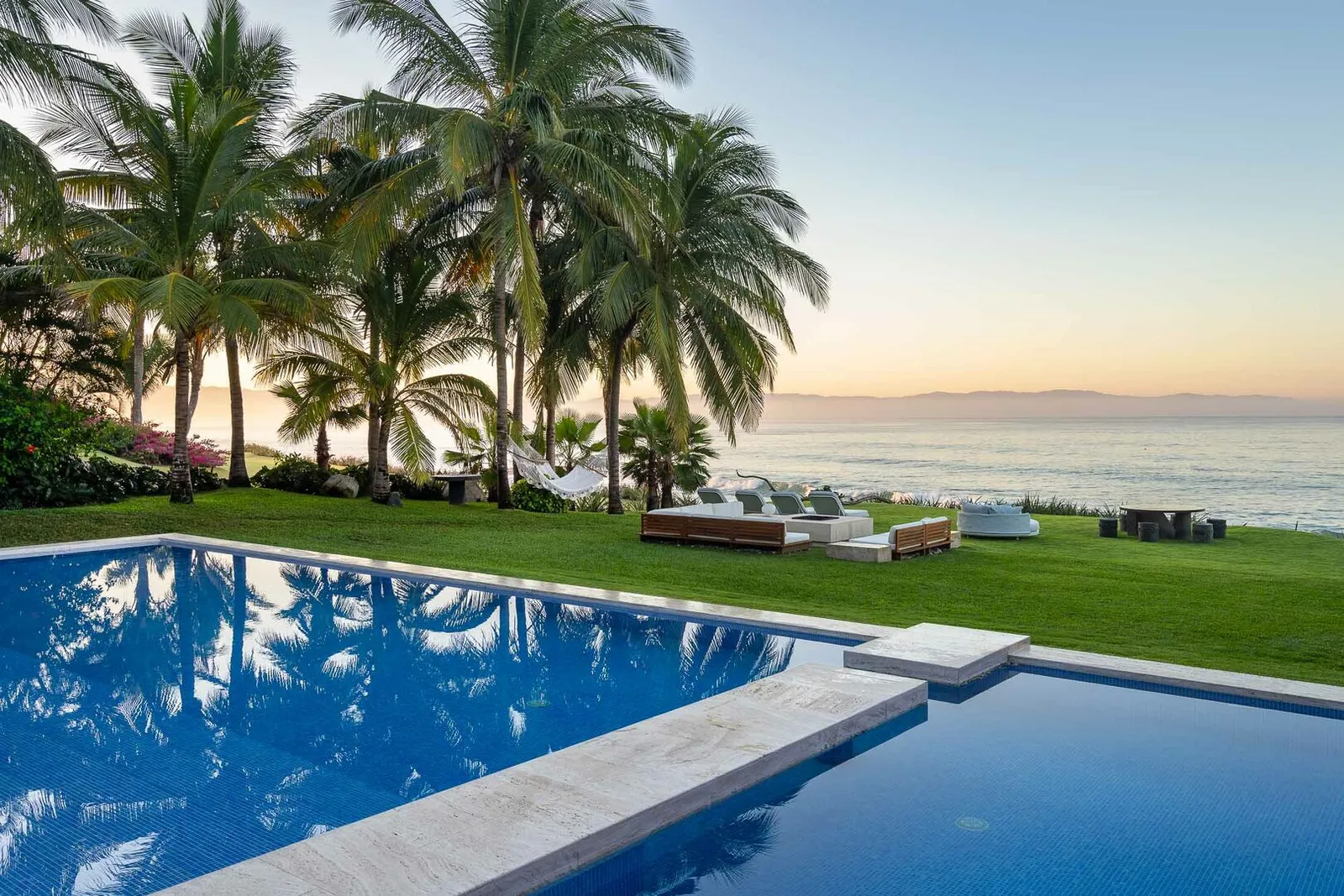
High season in Punta Mita runs January to April, with the most reliable weather and the humpback migration that passes offshore from November through March. Low season, May to October, brings summer rain, a green landscape, warm water and a much quieter peninsula. Holy Week in March or April, Thanksgiving in November, and Christmas and New Year at the absolute peak are the periods that fill first and need the longest lead time.
The shape of the Punta Mita year
Punta Mita is a year-round destination, but understanding the rhythm of the seasons will help you choose the right time for your visit and make the most of what this place offers.
Two forces set that rhythm. The first is the weather, which divides cleanly into a dry season and a rainy season, as it does along most of Mexico's Pacific coast. The dry months are bright, calm and predictable. The rainy months, roughly the summer and early autumn, bring warm water, dramatic afternoon skies and a landscape that turns an intense green. The second force is the holiday calendar of the people who come here: North American winter escapes, Mexican Holy Week, Thanksgiving, Christmas. That calendar determines how full the peninsula feels and what a villa costs far more than the weather does.
Put those two together and the year has a clear shape. What follows walks through it season by season, so you can match your trip to what you actually want from it.
High season, January to April
High season (January to April) is the classic time to visit Punta Mita, when the weather is at its most reliably perfect: warm and sunny, with low humidity and gentle Pacific breezes. This is also whale-watching season, November through March, when humpback whales migrate through the waters offshore. The resort is at its most vibrant during this period, with all restaurants, activities and services operating at full capacity. Prices reflect the demand, and advance booking is essential.
These are the months the peninsula was designed around. The Sierra Madre stands sharp behind the coast in dry-season air, the surf is consistent, and the two Jack Nicklaus Signature courses play in the conditions they were built for. If golf is part of the reason you are coming, this is the window, and it is worth choosing a home with that in mind. Villas in Pacifico Estates sit alongside the course, and the famous 3B, the natural island green out in the ocean that is reachable by amphibious cart when the tide allows, is at its most dramatic in the dry months.
High season is also the sociable season. The beach clubs are full, the restaurants are running everything on the menu, and the calendar of the wider Riviera Nayarit is at its busiest. Some people find that energising. Some people find it more than they wanted. It is worth knowing which one you are before you pick your dates.
Whale season, November to March
The humpbacks come into Banderas Bay to breed and calve, and they are not a subtle presence. Breaches are visible from terraces, from the golf course, and from the deck of any boat that happens to be out. You do not need to book anything to see them, though going out on the water gets you closer and lets you hear them, which is the part people do not expect.
The season overlaps neatly with the calmest, driest weather, which is a good part of why January to April became the classic window in the first place. If whales are the point of your trip, aim at the middle of the season rather than its edges, and take a home with height and a clear line to the water. The penthouses at TAU look out over the bay, and one of them is called PH Vista Ballena for reasons that become obvious around January.
The same months are good for the Islas Marietas, the protected islands off the point that sit inside a federal biosphere reserve. Access is regulated to protect the seabird colonies and the reef, so this is one of the few things here that genuinely has to be arranged rather than improvised. Clear winter water is what makes the snorkelling worth the trip.
Easter and Holy Week
Easter and Holy Week (March or April) is a distinct cultural experience, as Mexican families come to the coast for the traditional spring holiday. The atmosphere is festive and celebratory, with special events and activities throughout the resort. This is one of the busiest and most expensive periods of the year.
It is worth being clear about what makes this week different from the rest of high season. The crowd changes. This is Mexico's own holiday, multigenerational and loud in the best sense, and the beaches outside the gates fill with families who have been coming to this coast for decades. Sayulita and the public beaches along the bay are at their most alive. If you want to see the region as the region enjoys it, this is the week. If you want quiet, it is not.
Because it moves with the church calendar, Holy Week can land in March or in April, so check the year you are planning for rather than assuming. Villas in the larger communities absorb big family groups well, and a home like Casa Familia in Kupuri Estates, which sleeps thirty, exists precisely for the kind of trip this week produces.
Low season, May to October
Low season (May to October) offers a different but equally rewarding Punta Mita. The landscape transforms into a lush tropical green as the summer rains arrive, and the peninsula is noticeably quieter. Prices drop significantly, and villa guests enjoy a more intimate, private experience. The ocean is warm and calm, which makes it ideal for snorkelling and diving, and the sunsets during this period are particularly spectacular.
The rain here is worth explaining, because visitors from northern climates tend to imagine the wrong thing. This is not day-long grey drizzle. It is typically a build in the afternoon or a storm that arrives after dark, spectacular to watch from a covered terrace, and gone by morning, leaving the air washed and the hills greener than they were the day before. Mornings in the rainy season are frequently brilliant.
Warm water changes what the days are for. Visibility improves in stretches, the boats go out in flatter conditions, and the whole peninsula shifts toward the ocean. Surfers get a different set of conditions too: the summer south swells favour some breaks over the winter northwest swells, and the beginner-friendly waves at La Lancha, El Anclote, Burros and Veneros mean there is almost always somewhere worth paddling out.
Above all, it is quiet. You get the beach clubs without the queue, the restaurants without the wait, and the sense of a place operating at its own pace. Homes near the point such as Casa Akai feel especially private in these months, when the peninsula is closer to how residents experience it than how visitors usually do.
Thanksgiving and the turn of the year
Thanksgiving (November) marks the beginning of high season, with American families using the long weekend to escape to the warmth of Punta Mita. The atmosphere is festive and welcoming, and whale-watching season is just beginning.
November is one of the peninsula's genuinely underrated windows. The rains have finished but the landscape is still green from them, the water is still warm from summer, the humidity has dropped, and the first whales are arriving. For a few weeks the place has the weather of high season without yet being at full occupancy, and then Thanksgiving arrives and the season is properly open.
Christmas and New Year
Christmas and New Year are the absolute peak of the Punta Mita calendar, with the peninsula at its most glamorous and celebratory. Special events, gala dinners and fireworks create a memorable atmosphere, and demand for villa rentals is at its highest. Booking well in advance, often a year ahead, is essential for this period.
There is a specific reason this fortnight behaves the way it does. It is the one time of year when entire extended families travel together, which means the largest homes go first and go earliest. If your plan involves three generations under one roof at the end of December, treat the villa as the first decision you make rather than the last, and start the conversation long before the year in question.
Choosing your window
A simple way to decide:
- Reliable weather, whales, golf, full activity. January to April. Book early.
- Mexico's own holiday, family energy, the coast at its most alive. Holy Week, March or April.
- Green landscape, warm water, privacy, better value. May to October, accepting afternoon and evening rain.
- The quiet secret. November, before Thanksgiving opens the season.
- The full celebration. Christmas and New Year, planned roughly a year out.
Whatever window you choose, the practical shape of arrival is the same: Puerto Vallarta is the gateway airport, and the drive north around the bay to the peninsula takes roughly an hour depending on traffic and where in Punta Mita you are staying. After that, most guests do not touch a car again, and the days start arranging themselves around you rather than the other way round.
Common questions
- When is the best time to visit Punta Mita?
- For the most reliable weather, January to April is the classic window, warm and sunny with low humidity and gentle Pacific breezes. If you would rather have privacy, warm water and a green landscape, the low season from May to October delivers a quieter peninsula at lower prices. November sits between the two and is often the best compromise.
- When can you see whales in Punta Mita?
- Whale-watching season runs November through March, when humpbacks migrate through the waters offshore. They are frequently visible from terraces and from the golf course, and going out on the water gets you closer. The middle of the season is a safer bet than either edge.
- What is the rainy season actually like?
- The summer rains arrive with the low season and turn the landscape a deep tropical green. In practice the rain tends to build in the afternoon or arrive after dark rather than lasting all day, and mornings are frequently clear. The ocean is warm and calm in these months, which suits snorkelling and diving.
- How far ahead should we book for Christmas and New Year?
- This is the peak of the Punta Mita calendar and demand for villas is at its highest, so booking well in advance, often a year ahead, is essential. The largest homes go first because this is the season of extended families travelling together. Treat the villa as the first decision, not the last.
- Is Holy Week a good time to visit?
- It depends what you want. Holy Week falls in March or April and is one of the busiest and most expensive periods of the year, with Mexican families arriving for the traditional spring holiday and a festive atmosphere throughout. It is the best week to see the coast as the region itself enjoys it, and the worst week if you came for quiet.
- How do you get to Punta Mita?
- Puerto Vallarta is the gateway airport, and the road north around Banderas Bay to the peninsula takes roughly an hour depending on traffic and where you are staying. Most guests arrange transport in advance and then leave the car alone for the rest of the trip, since a golf cart covers almost everything inside Punta Mita.